
Ditch the Studio: AI Product Photography for Ecommerce Automation
The Relentless Cycle of Ecommerce Visuals
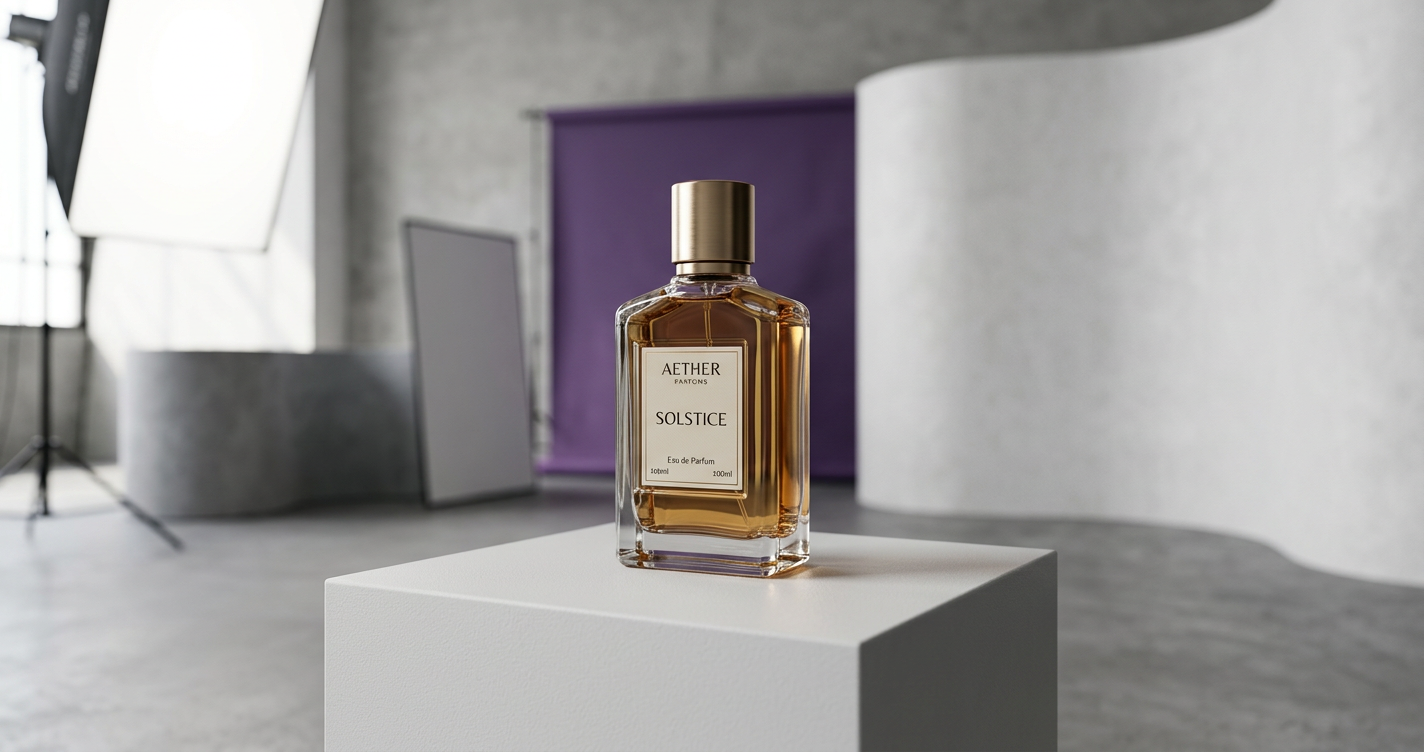
For any team managing an e-commerce catalog, the content treadmill never stops. Every new product launch, seasonal campaign, or channel-specific promotion demands a fresh batch of visuals. Traditionally, this meant a costly, time-consuming cycle: ship products to a studio, book photographers and stylists, shoot for days, and then spend weeks on retouching and post-production. The cost per visual was high, and the turnaround time was a constant bottleneck, making it nearly impossible to keep pace with market demands. A single hero shot for a product detail page (PDP) could cost hundreds, if not thousands, of dollars. Now multiply that by a catalog of 10,000 SKUs.
The challenge isn't just cost; it's one of scale and consistency. How do you ensure the lighting, shadow, and angle are identical across thousands of products shot months apart? How do you quickly generate lifestyle shots for a new social media campaign without a full-day shoot? For years, teams have tried to solve this with style guides and rigorous processes, but it remains a fundamentally manual, error-prone effort.
This is why the promise of AI product photography automation isn't just about creating a few novel backgrounds. It represents a fundamental shift in the operational logic of e-commerce creative production. It’s about dismantling the old assembly line and replacing it with an intelligent, automated workflow that delivers production-ready visuals on demand.
Beyond Simple Background Swaps: What is True Automation?
Early ecommerce visual AI tools focused on a single, powerful trick: background removal. While useful, this is merely the first step. True ai product photography automation is about building an end-to-end pipeline that handles the entire visual lifecycle, from a single, clean product shot to a full suite of channel-ready assets.
Imagine taking one high-quality photo of your product on a neutral background. An automated pipeline could then:
- Standardize Catalog Visuals: Instantly generate versions for your PDP with a perfectly uniform white or gray background, consistent shadow placement, and automated cropping to meet platform specifications for Shopify or Amazon.
- Generate Lifestyle Contexts: Create dozens of variations placing the product in hyper-realistic lifestyle scenes. A skincare bottle could appear on a marble countertop, a wooden vanity, or next to a pool, all generated from that single source visual.
- Create Campaign-Specific Ads: Need visuals for a holiday sale? The system can generate shots of your product surrounded by festive decorations, on a snowy background, or inside a gift box.
- Ensure Brand Consistency: Apply a consistent visual style, color palette, and mood across every single generated asset, ensuring that all 10,000 products feel like they belong to the same brand.
This isn't about replacing human creativity. It’s about using ecommerce automation to handle the repetitive, mechanical tasks that consume 90% of a creative team's time. The goal is to move from manually editing each individual visual to directing an automated system that produces consistent, on-brand content production-ready.
Why Do So Many AI-Generated Product Images Fail?
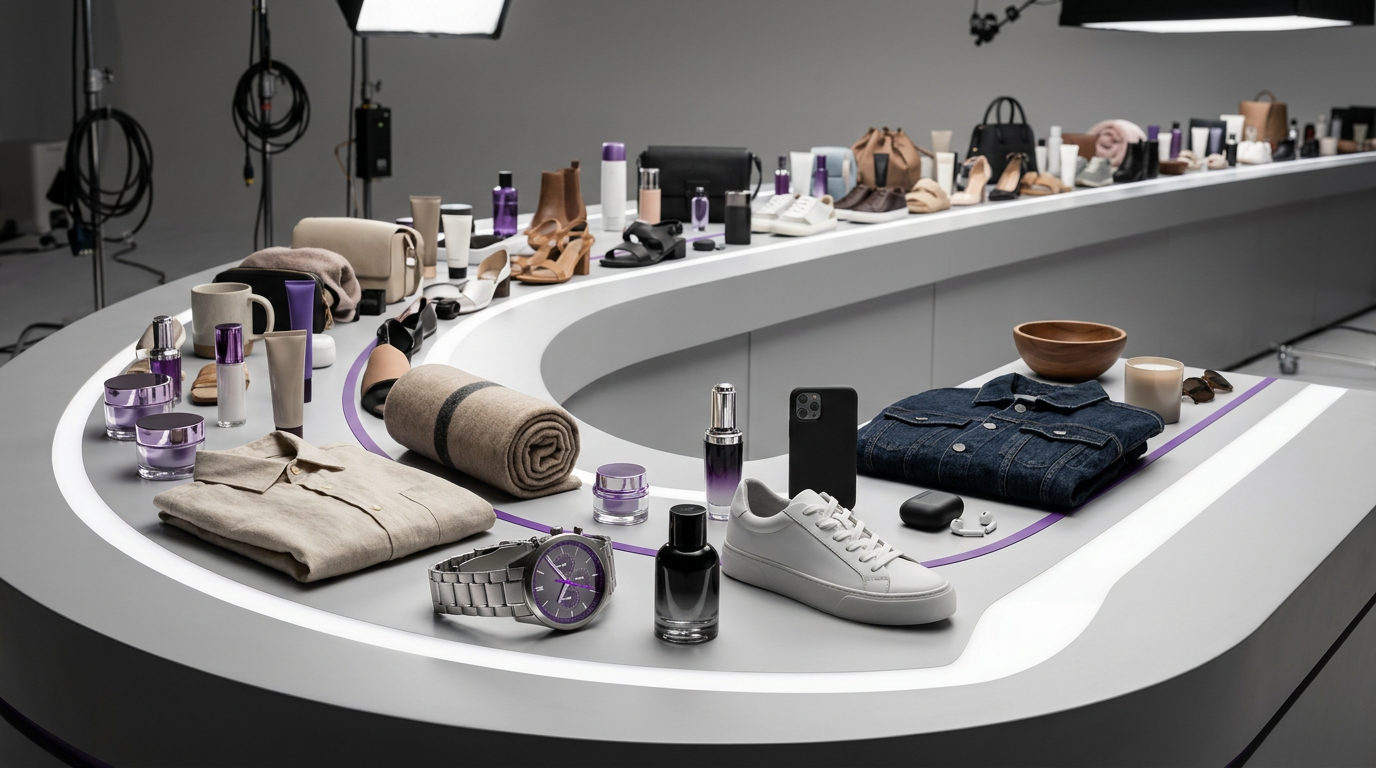
The internet is flooded with examples of generative ai product photos gone wrong: warped logos, misshapen products, and bizarre artifacts that instantly signal "this is fake." These failures almost always stem from a reliance on generic, consumer-grade tools that are not built for the precision that commercial use demands. A fun, surreal visual from a tool like OpenAI's DALL-E might be great for a blog post, but it will get torn apart in a brand’s quality assurance process.
Commercial-grade ai for ecommerce requires a different approach. A successful product photo aitool must be built on three core pillars: control, consistency, and trust.
Pillar 1: Control Over Creative Output
The biggest frustration for professionals using generative AI is its unpredictability. You can’t tell a generic model to "make the shadow 15% softer and shifted slightly to the left." You can't direct it to preserve a product's precise geometry or ensure a logo is never distorted. For commercial use, this lack of control is a non-starter. Products must be represented accurately.
This is why the future of professional visual generation lies in more sophisticated methods of directing the AI. Professionals need to be able to lock certain elements (like the product itself) and direct the composition, lighting, and style of the generated scene with precision. The human is the creative director; the AI is the incredibly fast, efficient production artist executing a clear vision. Without this level of fine-grained control, teams are just rolling the dice, hoping for a usable output among dozens of failed attempts.
Pillar 2: Consistency Across the Entire Catalog
For a brand, consistency is currency. A customer browsing a product grid expects to see a uniform presentation. Mismatched lighting, different background tones, or inconsistent angles create a jarring, unprofessional experience that erodes trust. While a human retoucher can follow a style guide, it’s a slow and subjective process.
An effective ai product photography pipeline solves this through automation. By defining a set of parameters - such as lighting direction, shadow density, and background color - the system can apply them flawlessly across thousands of different products. This ensures that a handbag shot in March and a pair of shoes shot in September appear to have been photographed in the same studio on the same day. This is where many standalone ecommerce visual ai tools fall short; they can create a stunning one-off visual but struggle to replicate that exact style consistently across a diverse product range.
What About Legal and Compliance Risks?
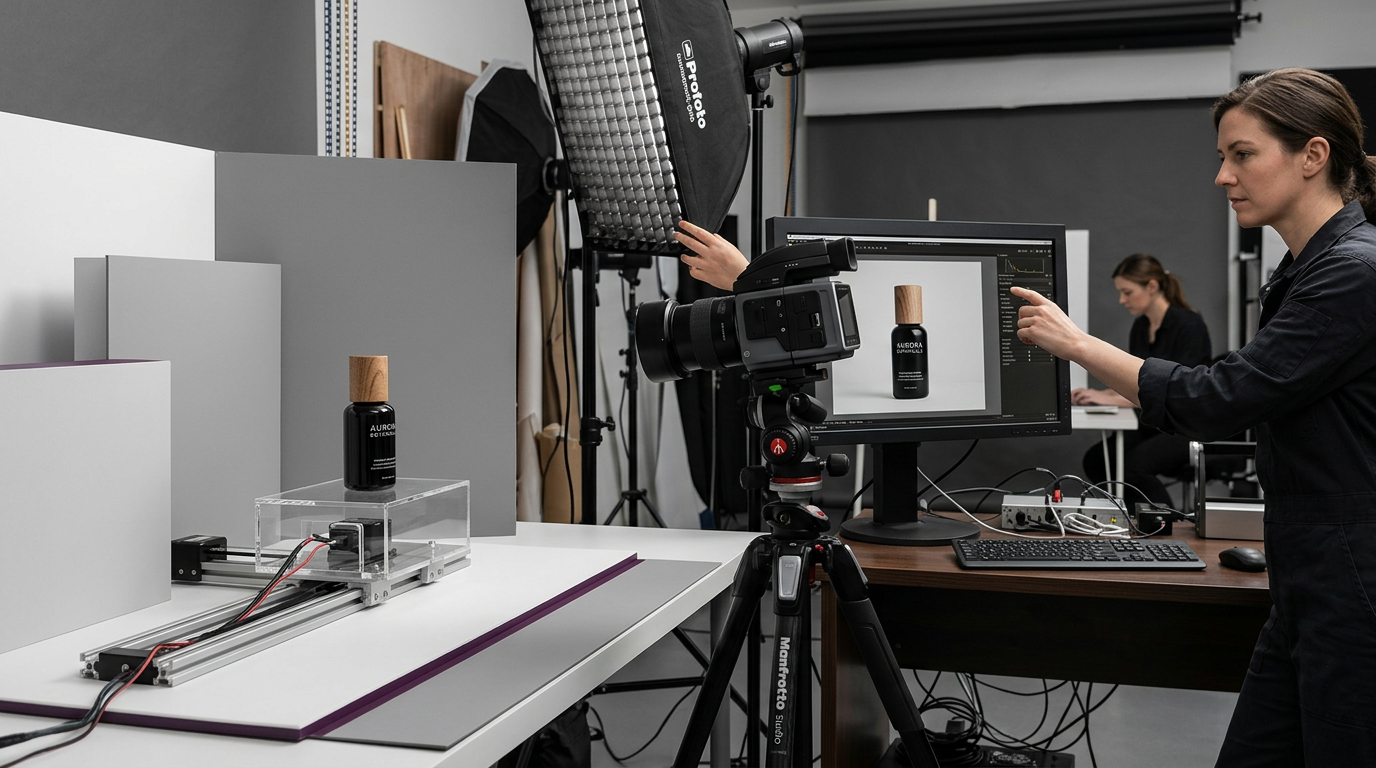
The rush to adopt generative AI has left many teams exposed to significant legal and compliance risks. Most popular models were trained by scraping vast amounts of data from the open internet, without regard for copyright. Using visuals generated from these models in a commercial setting is a legal minefield. A background scene might contain elements of a copyrighted photograph, or a generated texture could be derived from an artist's protected work.
This leads to the third, and perhaps most critical, pillar.
Pillar 3: Trust Through Rights-Clear AI
For a business, "good enough" isn’t good enough if the visual isn't commercially safe. The question every legal and brand team should be asking is: "What was the AI trained on?" If the answer is ambiguous, the risk is unacceptable.
Using rights-clear AI is the only way to ensure commercial safety. This means the visual foundation model was trained exclusively on licensed data from sources like Getty Images, Shutterstock, or from data that is fully owned. This guarantees that every output - from a simple texture to a complex lifestyle scene - is clean from a copyright perspective and indemnified for commercial use.
This is a stark contrast to many widely-used generative AI models, whose training data sources have been the subject of legal challenges. While tools from Adobe have pushed for a more commercially safe approach with their Firefly model, the core challenge for large organizations remains integration. A feature inside a design application is different from an API-first infrastructure that can plug directly into an automated workflow.
For teams building true automated product photo editing and generation pipelines, the underlying AI must be treated as a utility - reliable, safe, and built for purpose. Platforms like Bria are designed with this infrastructure-first mindset. The Bria Visual Engine, for example, is built upon a visual foundation model trained exclusively on licensed data, providing a foundation of trust. It offers API access to a suite of tools, from generative backgrounds to more programmatic control with its Visual Generative Language (VGL), allowing professionals to build the specific, rights-clear ai generated product images workflow their business needs.
Ditching the Studio, Not the Creativity
Moving away from the traditional studio model doesn't mean abandoning quality or creative control. It means reallocating resources intelligently. Instead of spending a fortune on repetitive shoots, brands can invest in capturing one perfect, high-resolution source image of each product. That single asset then becomes the seed for a limitless number of automated variations.
Photographers become more valuable than ever, but their role shifts from being assembly-line producers to creators of the pristine digital assets that fuel the automation engine. Creative directors move from policing style guides to defining the logic and aesthetic parameters that direct the AI. "Ditching the studio" is about trading a physical room for a flexible, scalable, and risk-free virtual one that finally allows your visual content strategy to keep pace with the speed of commerce.
Scale your brand safely.
Get your Bria API Key and start generating responsible, licensed visual content today.
Get API Key