
Is Your Enterprise Ready for AI-Powered Creative Automation?

Your Generative AI Pilot Was a Success. Now What?
Over the last two years, a common scenario has unfolded in marketing and creative departments. A small, innovative team accesses a generative visual AI tool, such as a public platform like DALL-E or an open-source model. They generate impressive and imaginative visuals, which gain leadership's approval. The pilot is deemed successful, leading to a directive to expand its application.
Then, reality hits. The vibrant, exciting visuals from the pilot are impossible to recreate consistently. The outputs are perpetually off-brand, with subtle (and sometimes not-so-subtle) deviations in style, color palettes, and composition. Legal teams raise concerns about the source of the training data. The workflow, which seemed so magical for one-off creations, crumbles when faced with the demands of producing hundreds of campaign assets or thousands of e-commerce product shots. The initial excitement gives way to a frustrating realization: there is a vast chasm between creating a single impressive visual and deploying a production-ready system for creative automation.
This is the critical juncture where many professional teams find themselves today. The question is no longer "Can AI generate visuals?" but rather, "Is our organization actually ready to automate creative workflows in a way that is controllable, compliant, and scalable?" The answer for most, despite successful pilots, is a resounding no. True readiness isn’t about access to a tool; it's about having the right infrastructure, workflows, and mindset.
Why a Simple Text-to-Image API Is Not a Solution
The market is flooded with tools that offer an ai image generation api for enterprise. Many are, in essence, a simple wrapper around a text prompt field. You send a string of text; you get a visual back. While this is a powerful demonstration of what generative visual AI can do, it’s fundamentally a slot machine. You pull the lever and hope for the best. For professional teams, hope is not a strategy.
This approach fails for several key reasons in a commercial setting:
- Lack of Control: A simple text-to-image API offers little recourse when the output is almost, but not quite, right. How do you change the lighting on a specific object without regenerating the entire scene? How do you ensure your brand’s specific shade of blue is used, not a close approximation? Without granular control, every generation is a gamble, leading to endless rounds of re-directing and wasted compute resources.
- Inconsistency at Scale: Generating one perfect visual is an art. Generating 1,000 visuals that all adhere to the same stringent brand guidelines is an engineering problem. Basic APIs lack the mechanisms to enforce style consistency, maintain character identity across a campaign, or apply a uniform aesthetic to a product catalog. This results in a chaotic, fragmented brand presence.
- The "Black Box" Problem: When you can’t see the logic behind how an AI agent interprets a prompt or executes an edit, you’re flying blind. Simple APIs provide the final output without any visibility into the "how." This lack of transparency means teams cannot audit the generation process, troubleshoot why an edit failed, or predictably iterate on a concept. Without understanding the agent’s decision-making path, you lose the ability to build a reliable, repeatable creative workflow.
These limitations are why many enterprise AI https://bria.ai/solutions initiatives for visuals stall. Teams discover that a consumer-grade tool bolted onto a professional workflow doesn’t create efficiency; it creates rework and risk.
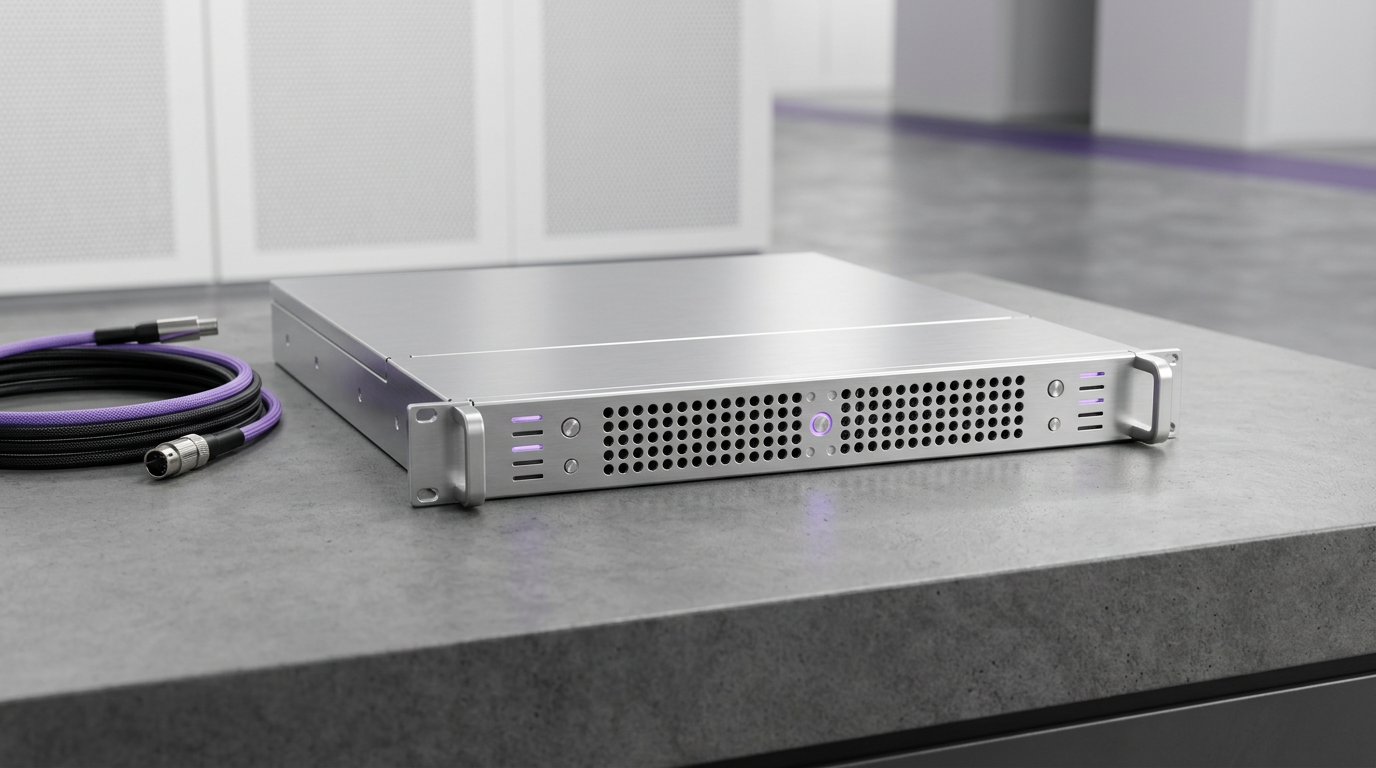
What does a production-ready visual AI API integration actually require?
Moving from experimentation to production means shifting your evaluation criteria. Instead of asking "How pretty is the visual?" you must ask, "How predictable and controllable is the output?" This requires a solution built on an entirely different set of principles. A true enterprise-grade visual AI API integration is defined by its ability to provide control, trust, and flexibility.
This involves looking for specific architectural components:
-
Precise, Parameter-Driven Control: Professionals don't just describe; they direct. An API built for creative automation must treat the generation process not as a magic trick, but as a programmable function. This means going beyond text to include parameters for style, composition, color, and subject identity, often using reference visuals as inputs. It’s about being able to lock certain variables (like a brand’s logo or a character’s face) while iterating on others (like the background).
-
Flexible Integration Options: There is no one-size-fits-all deployment model. A mature platform should offer multiple ways to connect with your existing tech stack. This could be a comprehensive REST API, a dedicated AI image generation iframe SDK for easy embedding into your internal applications, or the ability to host the model within your own virtual private cloud (VPC) for maximum security. The key is that the technology adapts to your workflow, not the other way around.
-
Guaranteed Commercial Safety: The foundation of any professional creative workflow is trust. This means using a generative visual AI system built exclusively on rights-clear training data. It removes the legal ambiguity and indemnification risks associated with models trained on scraped internet content. Furthermore, integrated content moderation that automatically flags outputs for potential safety issues is not a feature; it is a fundamental requirement for protecting brand reputation.

Are Your Creative Workflows Ready for Automation?
Acquiring the right technology is only half the battle. To truly succeed with creative automation, internal workflows must also evolve. Slapping an API call into a Trello board isn’t a workflow; it’s a recipe for chaos. True readiness requires a structured approach to managing the human-AI collaboration.
Ask yourself and your team these critical questions:
- How do we translate a creative brief into API parameters? Is there a systematic process for converting subjective creative direction into the concrete, programmable inputs the AI needs?
- Who owns the "visual source code"? When you can define a visual through a combination of text, reference visuals, and configuration settings, that definition becomes a reusable asset. How are you storing, versioning, and sharing these "prompts"?
- What does our review process look like? How do you move from AI-assisted generation to final approval? Does your tooling allow for iterative refinement, or is it an all-or-nothing regeneration each time?
- How do we measure success? Is the goal to reduce cost, increase speed, or enable personalization? Having clear metrics is crucial for proving the value of your enterprise AI investment.
Answering these questions reveals the gaps in your operational readiness. The goal is to build an assembly line for visual production, where the AI is a predictable, controllable machine on that line, operated by skilled professionals.
Building a Controllable, Rights-Clear Visual Pipeline
Addressing these challenges requires a shift towards visual AI infrastructure. Instead of a simple tool, professional teams need a platform designed for the realities of commercial content production. This is where platforms like Bria are establishing a new standard for creative automation.
Bria provides a full visual AI infrastructure that is architected around the core pillars of control, trust, and flexibility. The platform’s API-first design acknowledges that enterprise AI must seamlessly integrate into existing systems. It’s not about forcing teams to adopt a new, monolithic application.
Crucially, it solves the control problem through its Visual Generative Language (VGL). This approach moves beyond basic text-to-image direction, allowing teams to use a combination of text, reference visuals, and structured commands to direct the AI with precision. This makes it possible to do things that are essential for commercial work, such as swapping a background while keeping the foreground product perfectly intact, or applying a consistent brand style across dozens of different visual concepts. By making visual generation a programmable and repeatable process, it becomes a reliable component of an automated workflow.
Furthermore, the entire system is built on a foundation of trust. Bria’s visual foundation models are trained exclusively on licensed, rights-clear data, providing an indispensable layer of legal protection for commercial use. This focus on building a commercially safe ecosystem is a critical differentiator from platforms like Stability AI or OpenAI’s DALL-E, whose data sources can present legal and reputational risks. When you embed AI image generation capabilities into your core business applications, you need to be certain that the output is safe for any commercial context.
Ultimately, becoming ready for AI-powered creative automation means choosing infrastructure over novelty. It means demanding the same level of control, reliability, and compliance from your visual generation pipeline as you do from any other mission-critical part of your tech stack. The magic isn't in the generation of a single visual; it's in the creation of a predictable, scalable engine for producing on-brand visuals day in and day out.
Scale your brand safely.
Get your Bria API Key and start generating responsible, licensed visual content today.
Get API Key